Relevance
The artifact must address the control requirement directly.
AIGR structures AI governance evaluation across inventory, control assessment, evidence verification, framework mapping, remediation and controlled rating decisions.
AIGR connects control evidence, critical gates and governed decision records so management can see both the analytical result and the evidence supporting it.
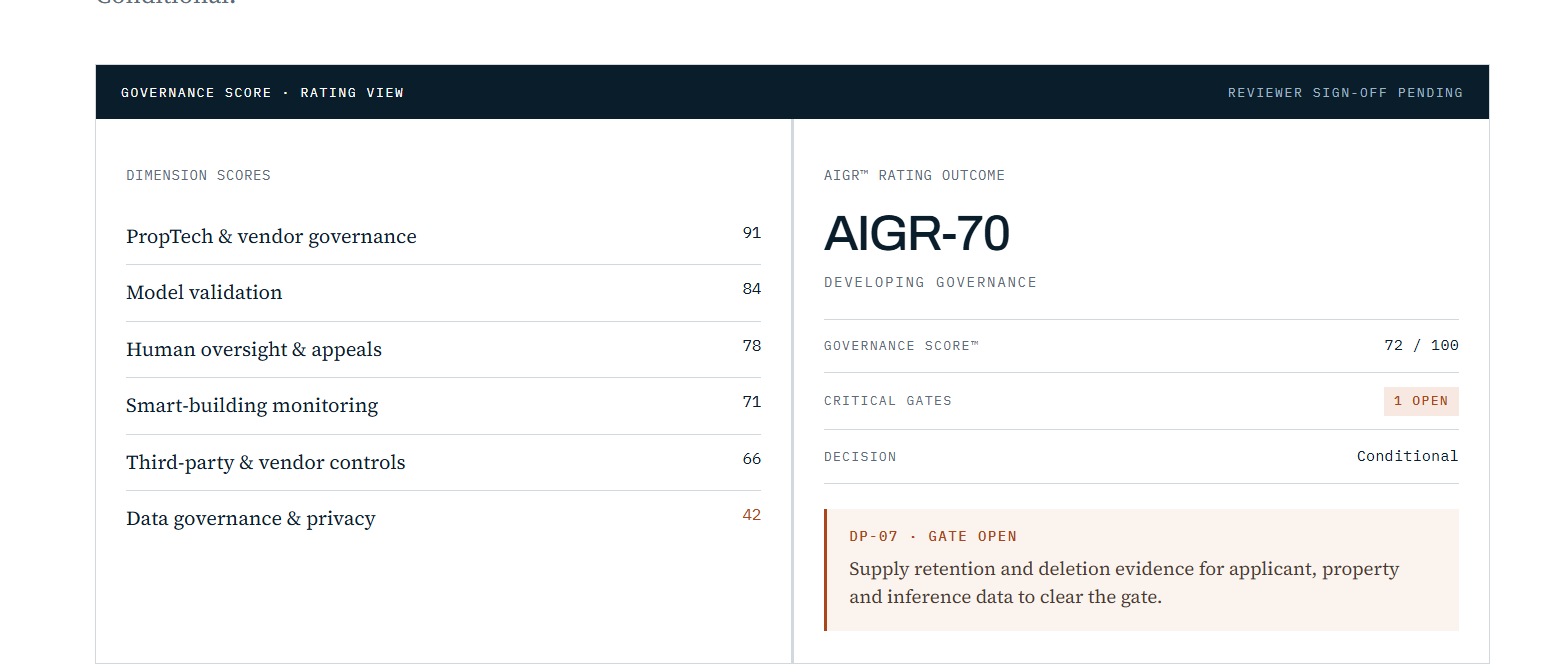
The rating view keeps score, evidence completeness, open gates and validity together so a strong average cannot obscure a material control failure.
Explore AI Governance Ratings →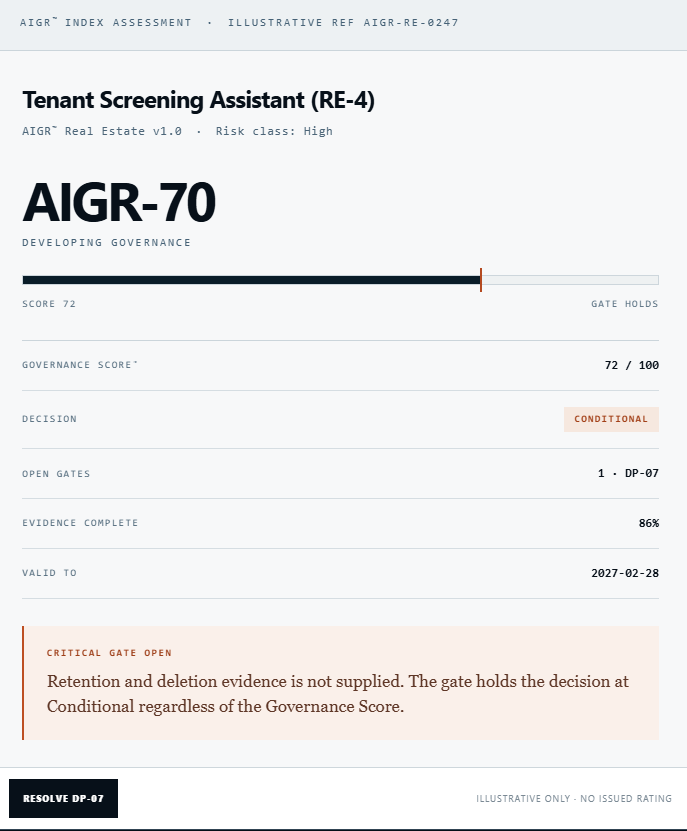
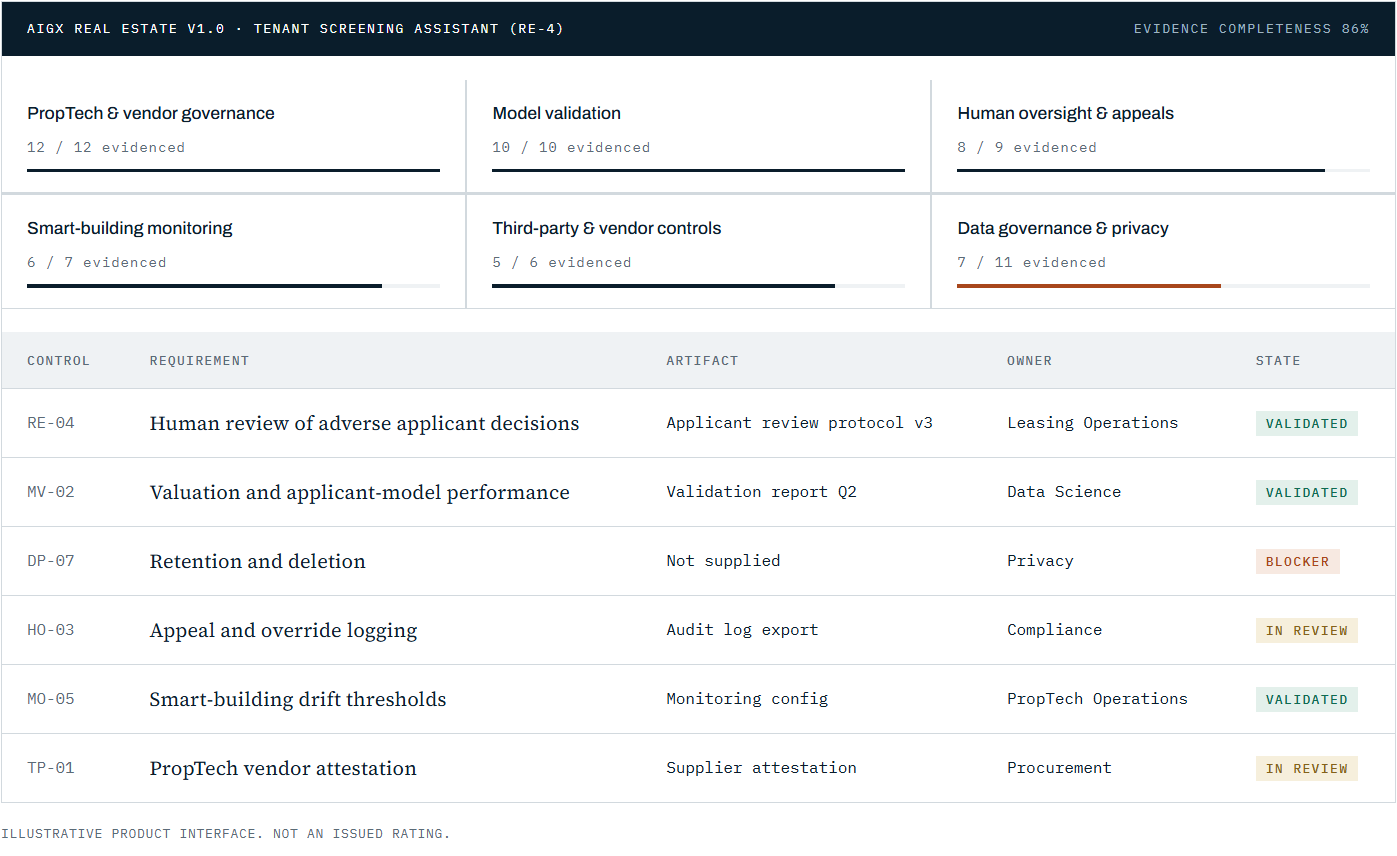
Evidence coverage is visible by domain, while each control retains its requirement, artifact, accountable owner and current state.
Explore the governance platform →Dimension scores support diagnosis. The governed outcome remains subject to material blockers, evidence quality and controlled approval.
The methodology separates stated intent from demonstrable operating practice. Evidence is evaluated for relevance, currency, traceability and sufficiency.
The artifact must address the control requirement directly.
The artifact must reflect the system and assessment period in scope.
Ownership, date, source and evidence lineage remain identifiable.
Evidence should demonstrate that the control operates, not only that it is intended.
Rule-based evidence verification, framework readiness analysis, control-gap identification and sequenced governance planning.
Controlled assessment, evidence review, rating recommendation, independent approval and retained rating decision records.
A dedicated portal for tenant screening, valuation, PropTech, smart-building systems, human oversight, appeals, privacy, vendor governance and evidence-backed critical gates.
Entity, AI system, lifecycle, jurisdiction and evidence period are defined before issuance. Methodology versions, evidence references and decision records are retained to support reproducibility, review and challenge.